1 · Familiar experience
Does this image contain a cat?
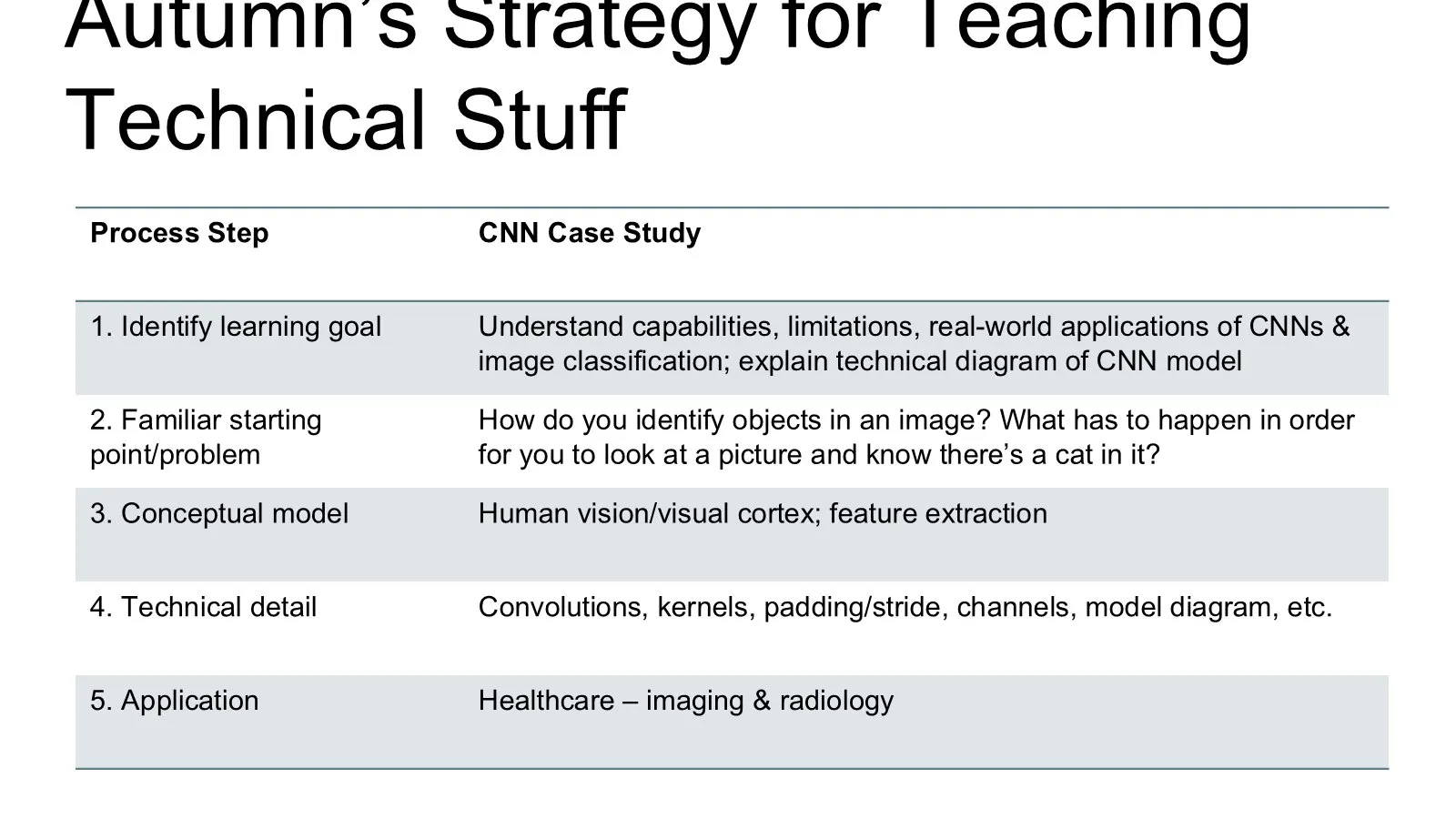
The lecture opened with a task students regarded as almost trivial: decide whether each of several images contained a cat.
2 · Familiar experience
How do you know?
Then students were asked to explain how they knew. Their difficulty articulating a judgment they make instantly was the point.
3 · Conceptual model
The computational problem
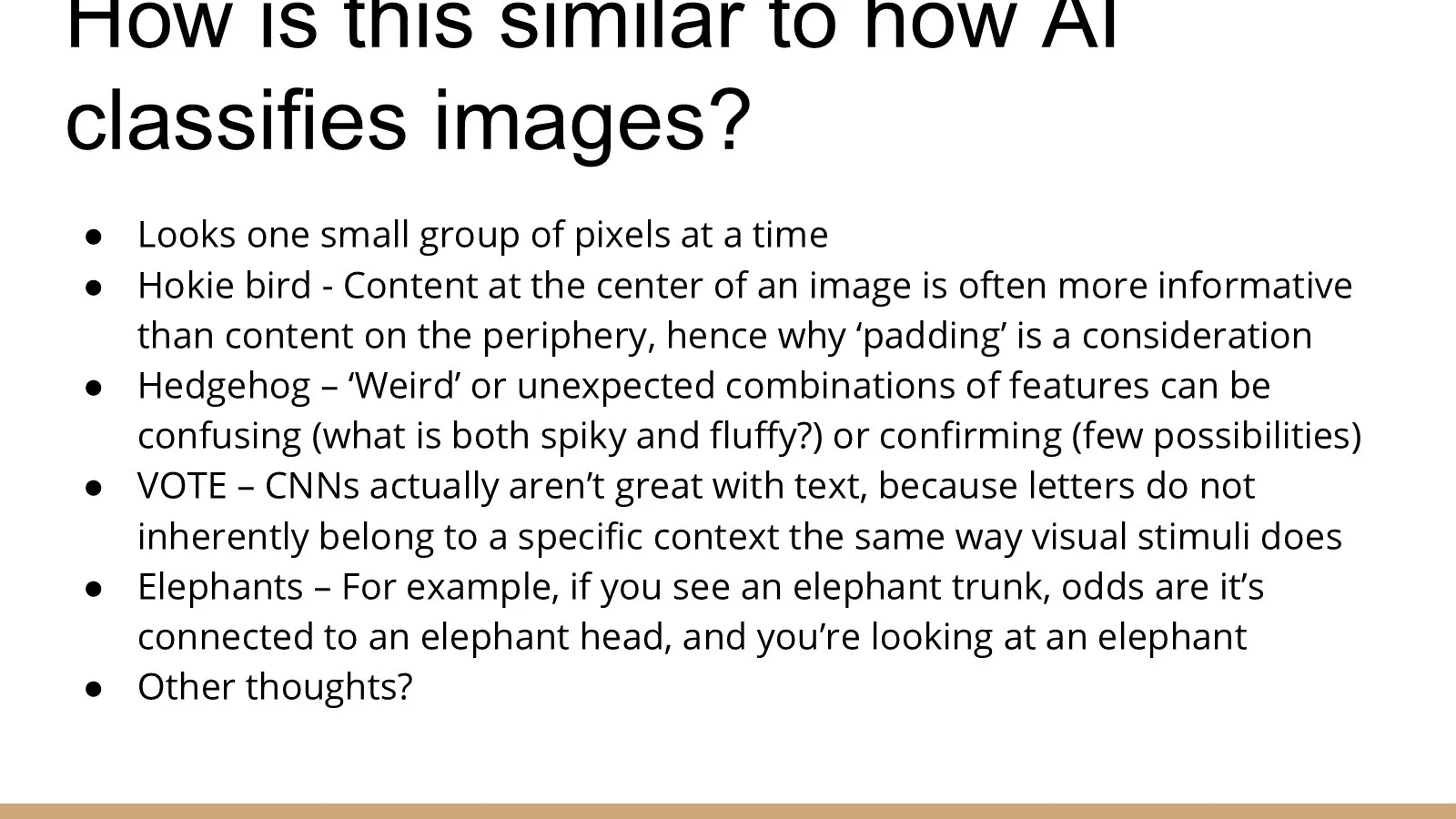
That difficulty illustrates why teaching a computer to interpret visual information is hard: the computer receives only a grid of numbers.
4 · Conceptual model
Borrowing from human vision
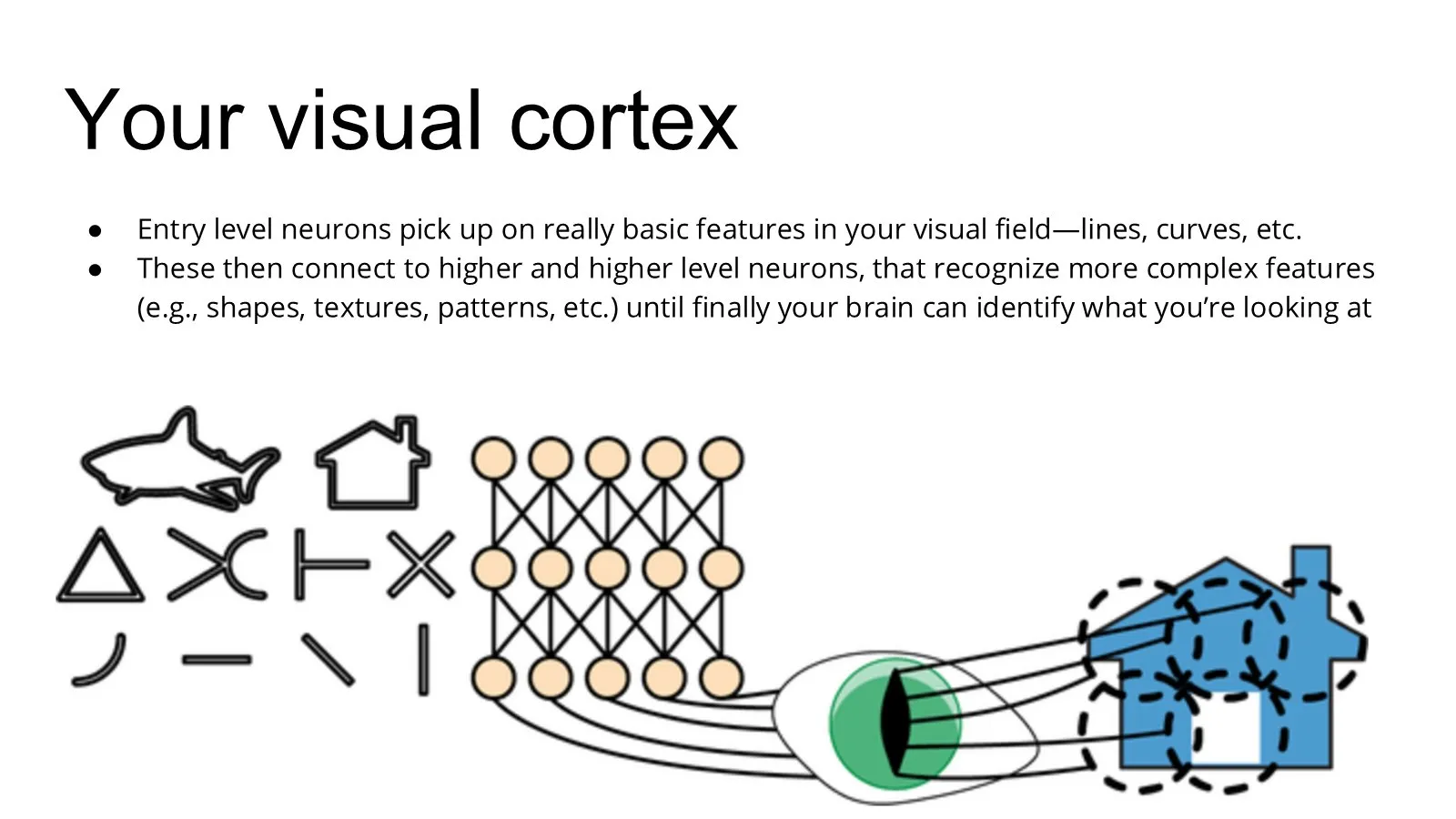
Human visual processing became the intuitive bridge to receptive fields — small regions that each respond to local patterns — and to hierarchical feature extraction, from edges to parts to whole objects.
5 · Conceptual model
One section at a time
In an interactive activity, images were revealed one small section at a time. Students identified the image and named the features that informed — or misled — their judgments.
6 · Technical detail
Kernels, pooling, and feature maps
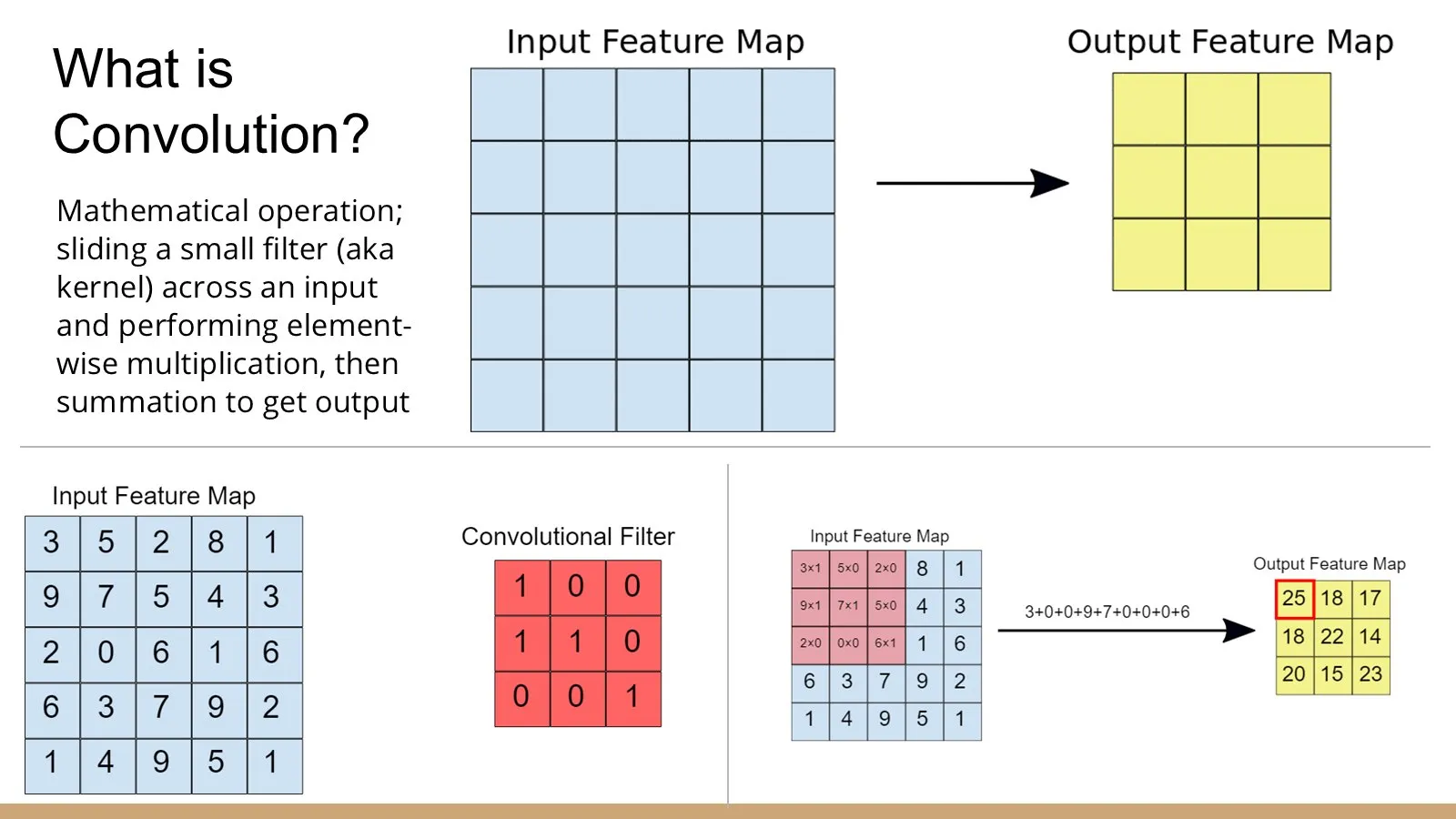
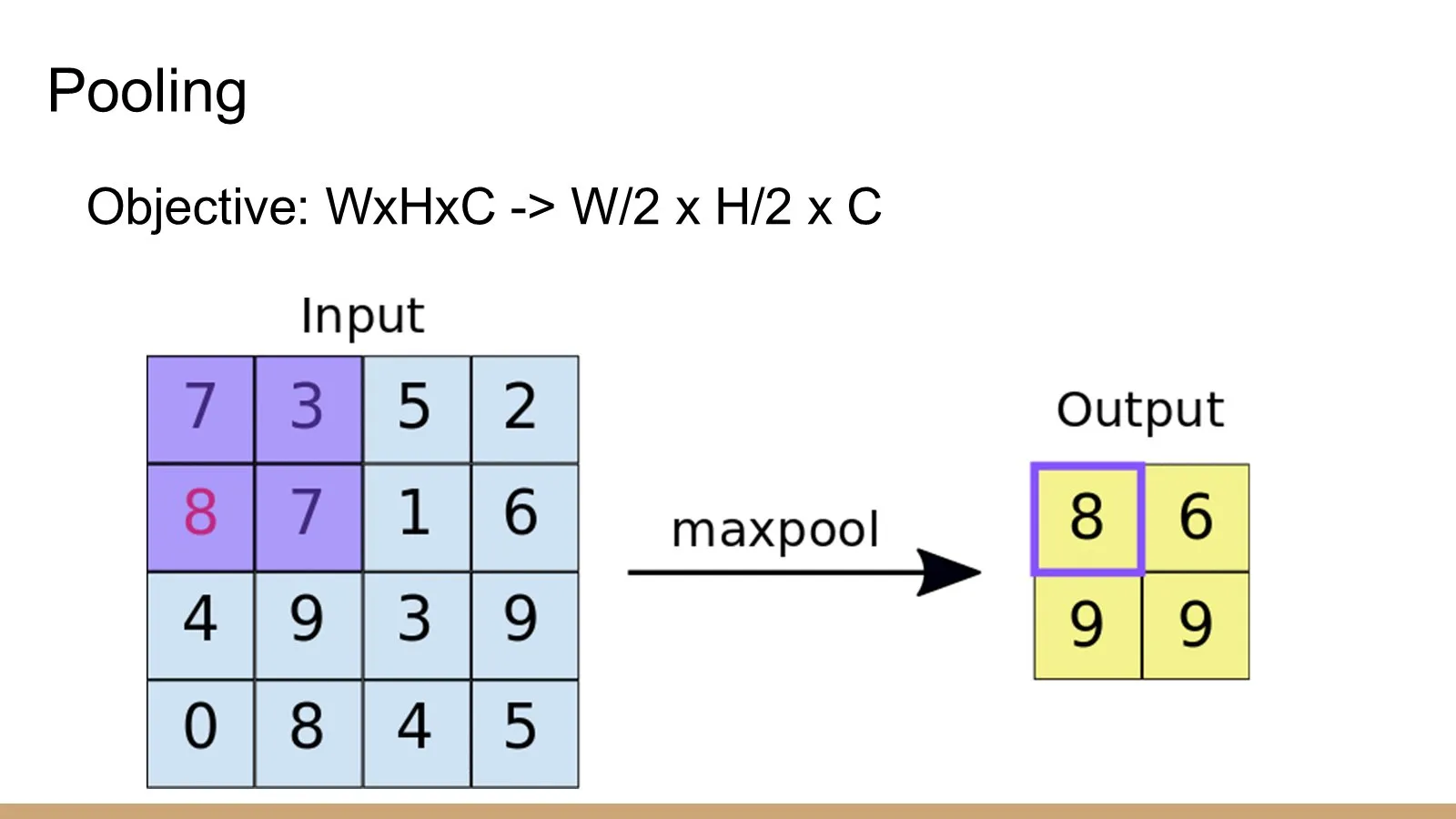
Only after that conceptual foundation were the mechanics introduced: kernels sliding across an image, the feature maps they produce, and pooling that condenses them.
7 · Authentic application
Why it matters
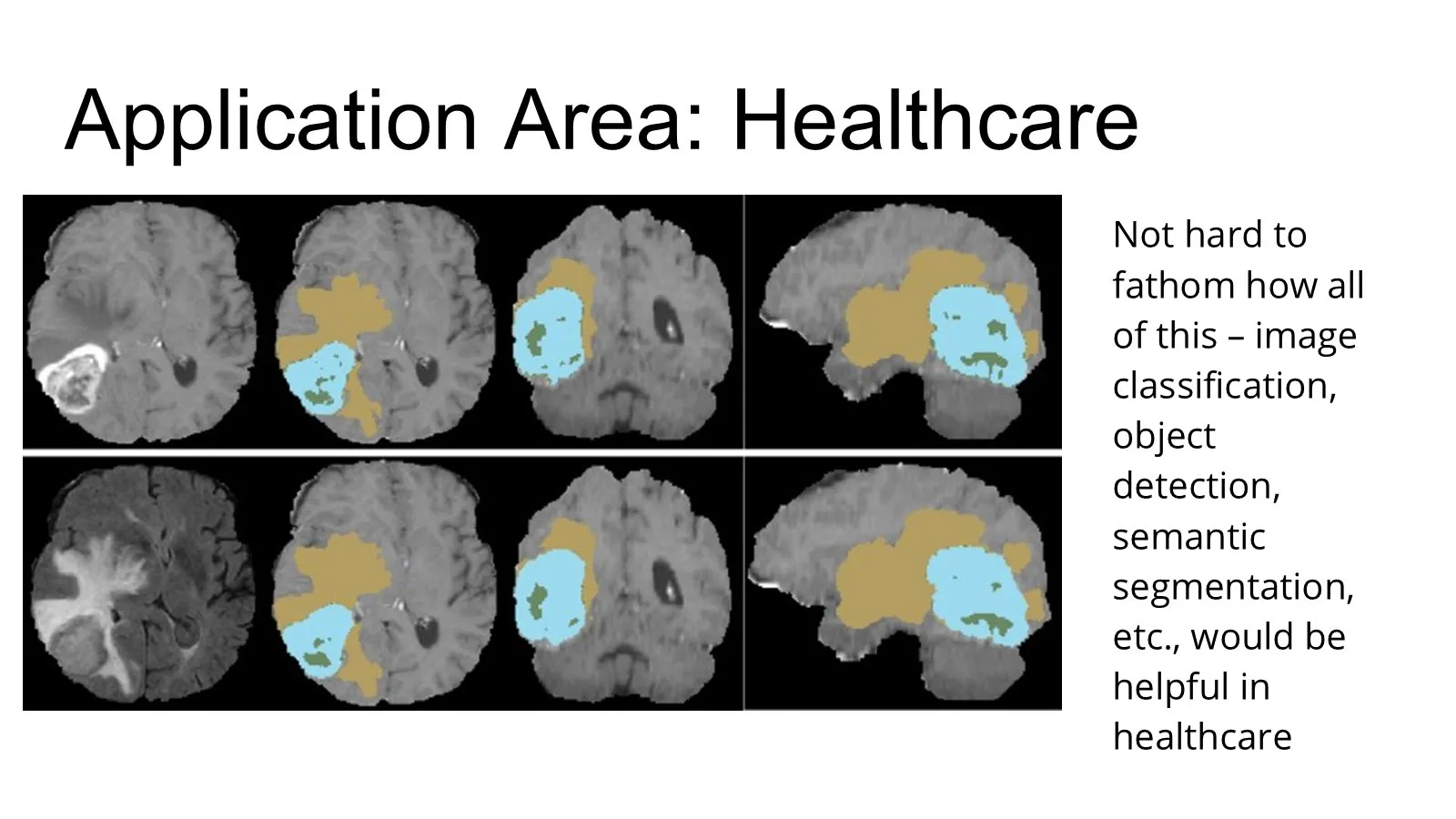
The lecture closed by connecting image classification to real-world applications, particularly in healthcare.
8 · Throughout
Checking understanding along the way
Questions embedded throughout the lecture made it possible to assess understanding before moving forward, rather than discovering confusion at the end.
Teaching
Belonging first, then rigor
Students are better able to undertake difficult intellectual work when they believe they belong to a community of learners and that their instructor is invested in their success.
One of the most memorable moments of my undergraduate education was when a professor I had never met welcomed me by name, held the door for me, and asked several students — whom he also addressed by name — to make room for me in their row.
His actions communicated that I was not anonymous, that my presence mattered, and that my success was important to him.
Care is not shielding
Caring for students does not mean shielding them from struggle. It means building the self-efficacy they need to meet rigorous expectations — the confidence that comes from facing and overcoming problems.
Start from what students know
Technically complex material becomes approachable by beginning with what students already understand, then progressively revealing the underlying computational problem.
Practice before judgment
Students gain confidence when they can apply unfamiliar concepts, receive feedback before a final evaluation, and revise their thinking rather than being judged on a first attempt.
Signature lesson
Is there a cat in this image?
A guest lecture on computer vision and convolutional neural networks (CNNs) for Artificial Intelligence, Machine Learning, and Deep Learning in Business Information Technology at Virginia Tech. This is not a CNN tutorial. It is the structure of the lesson: familiar experience, then a conceptual model, then technical detail, then authentic application.
Teaching artifacts
Lessons and materials
Use the arrow buttons or arrow keys to move through slides. Slides never advance on their own.
Computer vision and convolutional neural networks
- Audience
- Students in Artificial Intelligence, Machine Learning, and Deep Learning in BIT, Virginia Tech (guest lecture, delivered twice; Spring 2026 version shown)
- Learning objective
- Understand the capabilities, limitations, and real-world applications of CNNs and image classification, and explain a technical diagram of a CNN model.
- Teaching challenge
- Students may at first feel intimidated by complex technical material.
- Instructional choice
- Begin with a familiar task (is there a cat?), build a conceptual model from human vision, reveal images one receptive field at a time, and only then introduce kernels, pooling, and feature maps.
- Evidence or reflection
- The instructor invited the lecture back the next time the course was offered. After the second delivery, one student reported their understanding of CNNs had risen “from a 4 to a 7.”


Slide 1 of 11
Preparing to teach: a Ph.D. seminar session
- Audience
- Doctoral students in the Ph.D. Seminar in AI, Machine Learning, and Deep Learning, Virginia Tech (Fall 2026), each preparing a 45-minute presentation and demonstration of an AI technology
- Learning objective
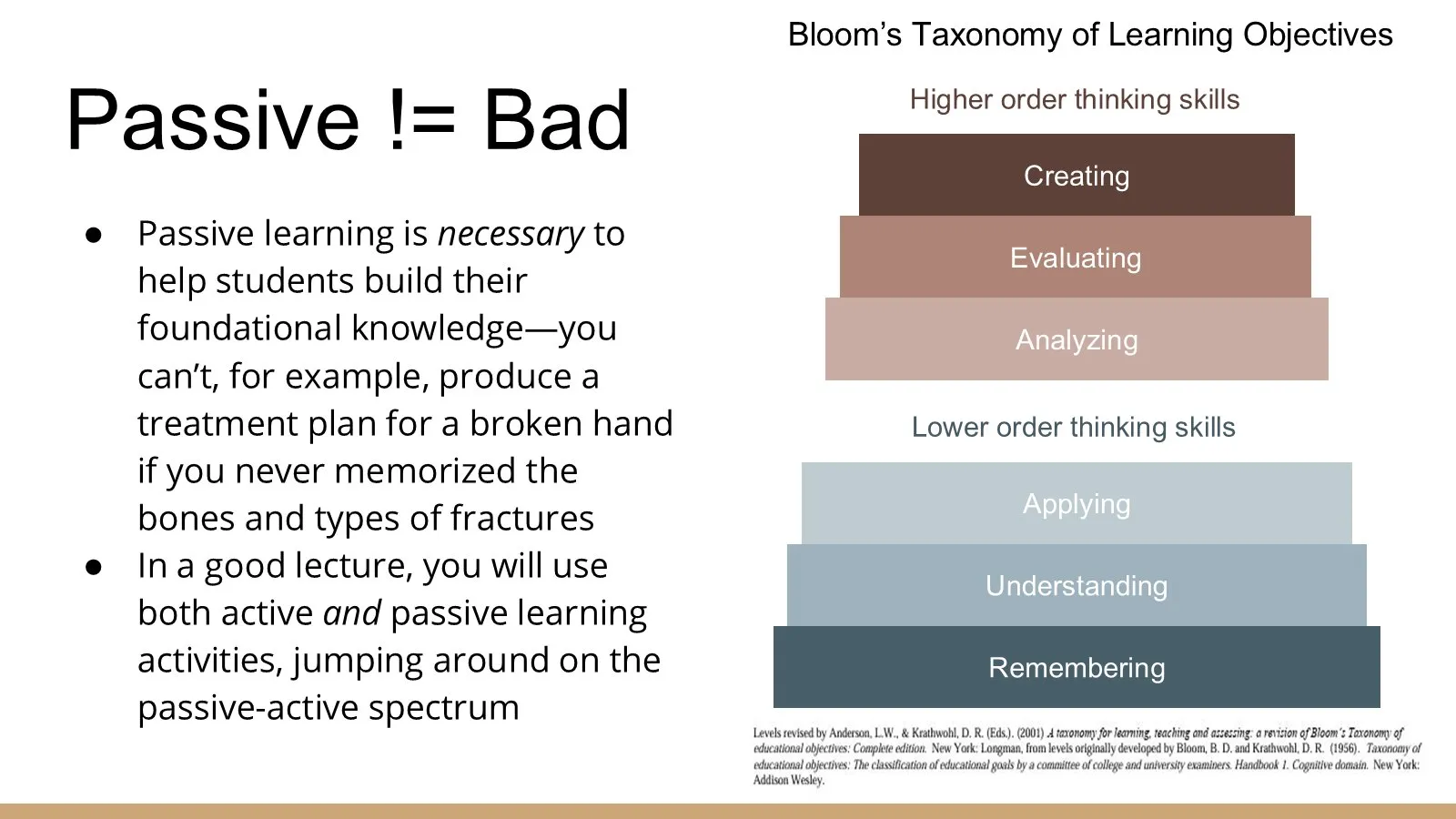
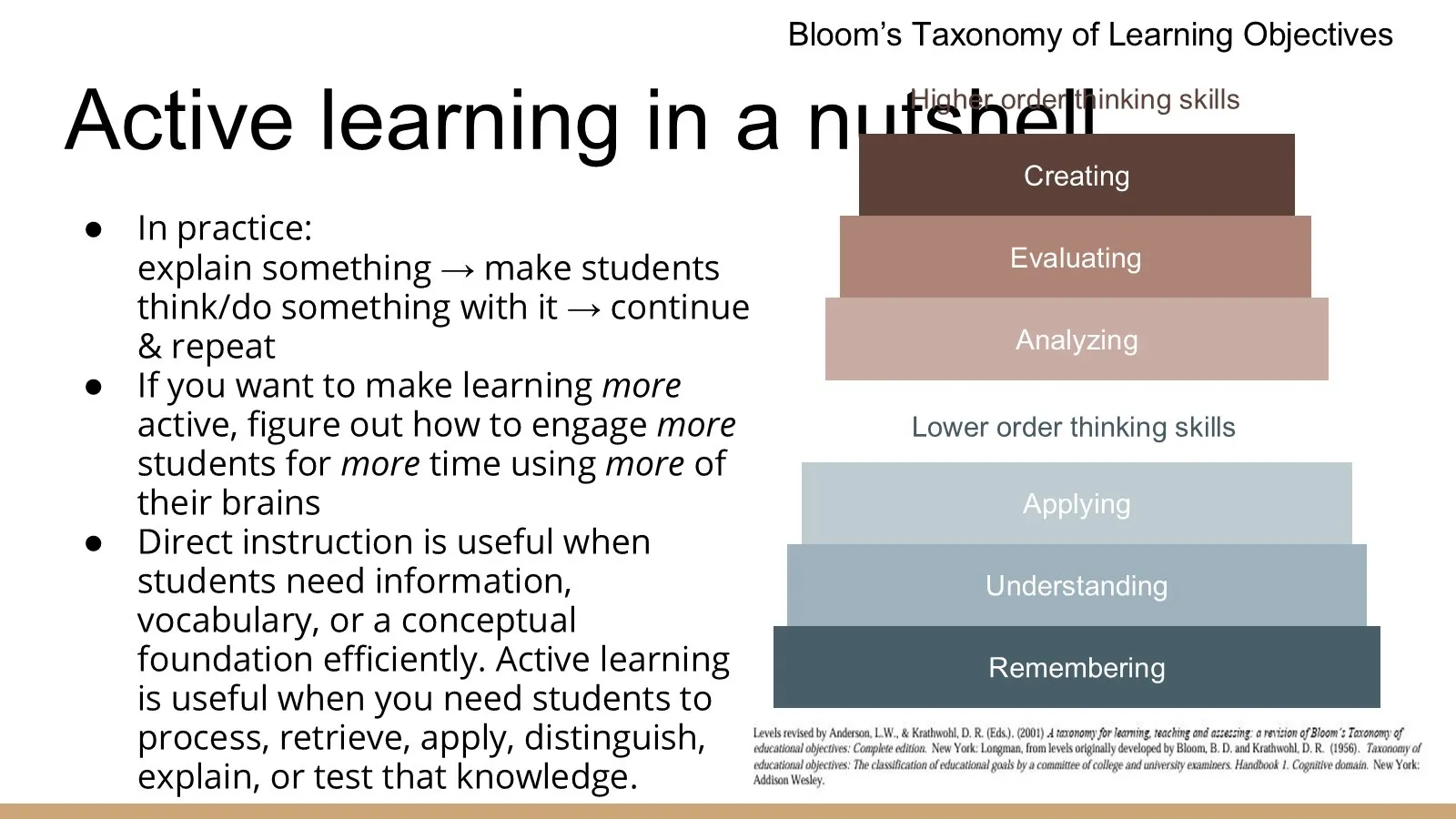
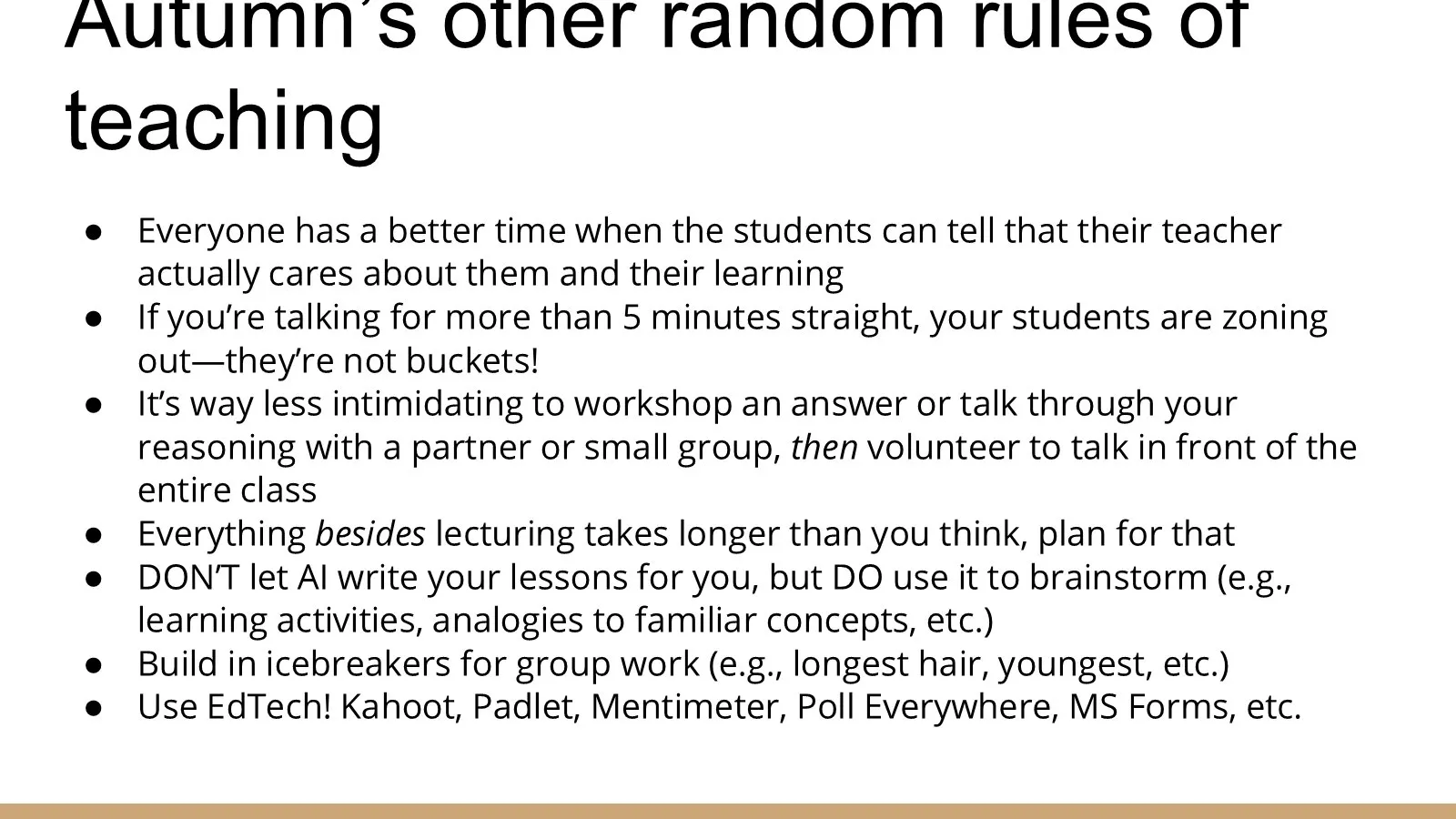
- Plan a 45-minute lesson around what students should understand or be able to do by the end, using evidence-based active-learning strategies.
- Teaching challenge
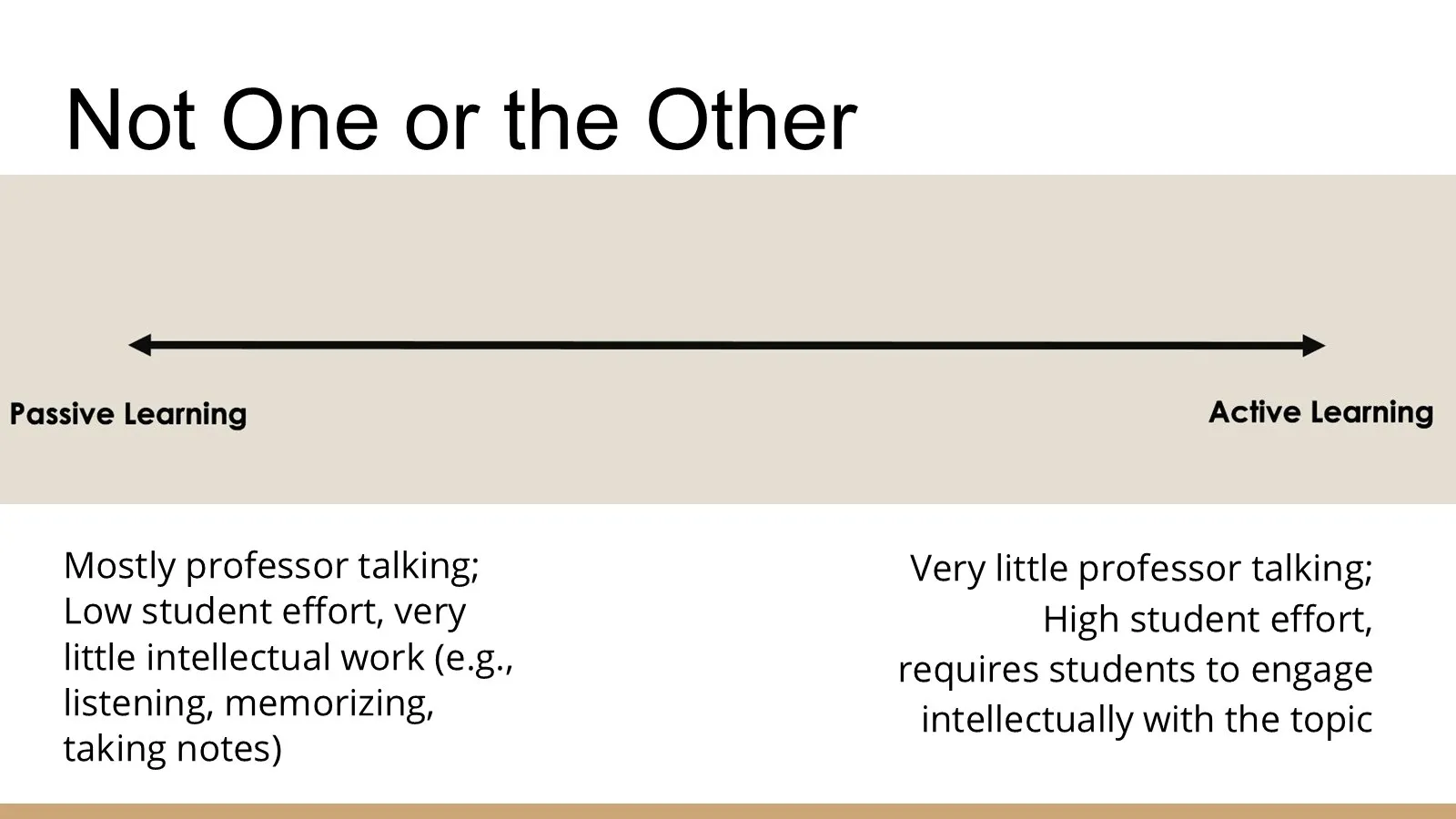
- Forty-five minutes is not enough time to teach everything you know about a subject, and the default lecture model encourages passive learning.
- Instructional choice
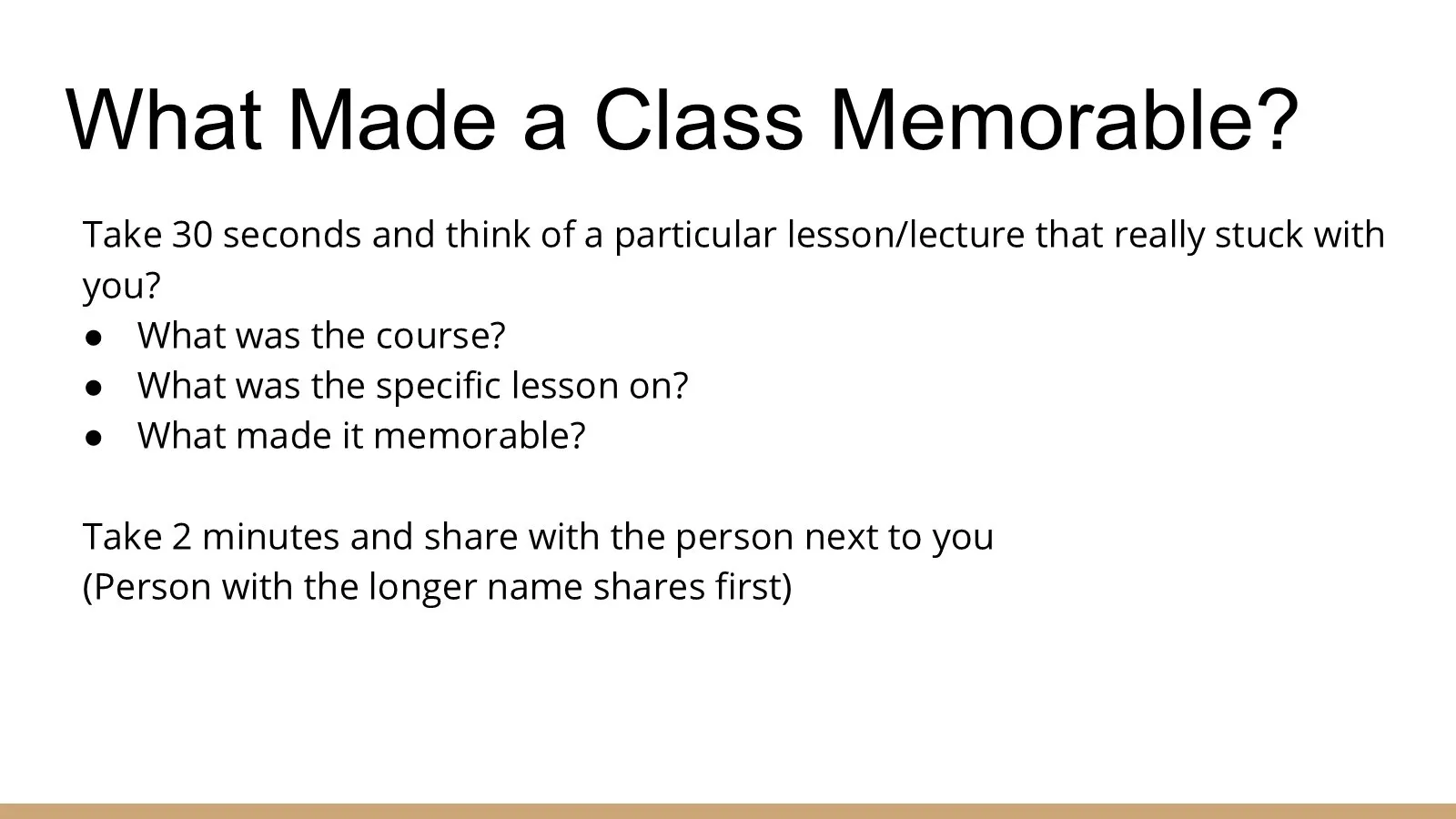
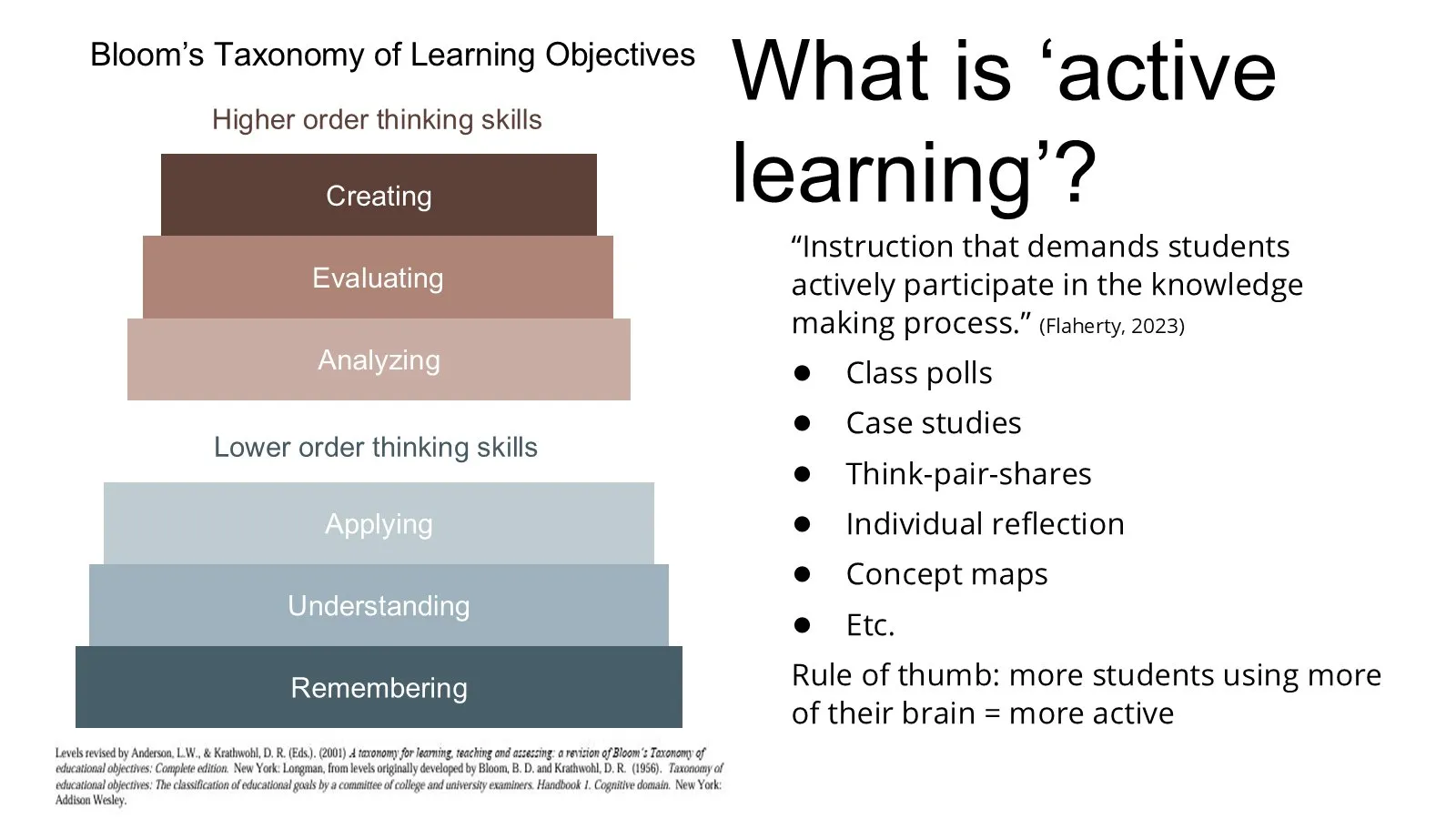
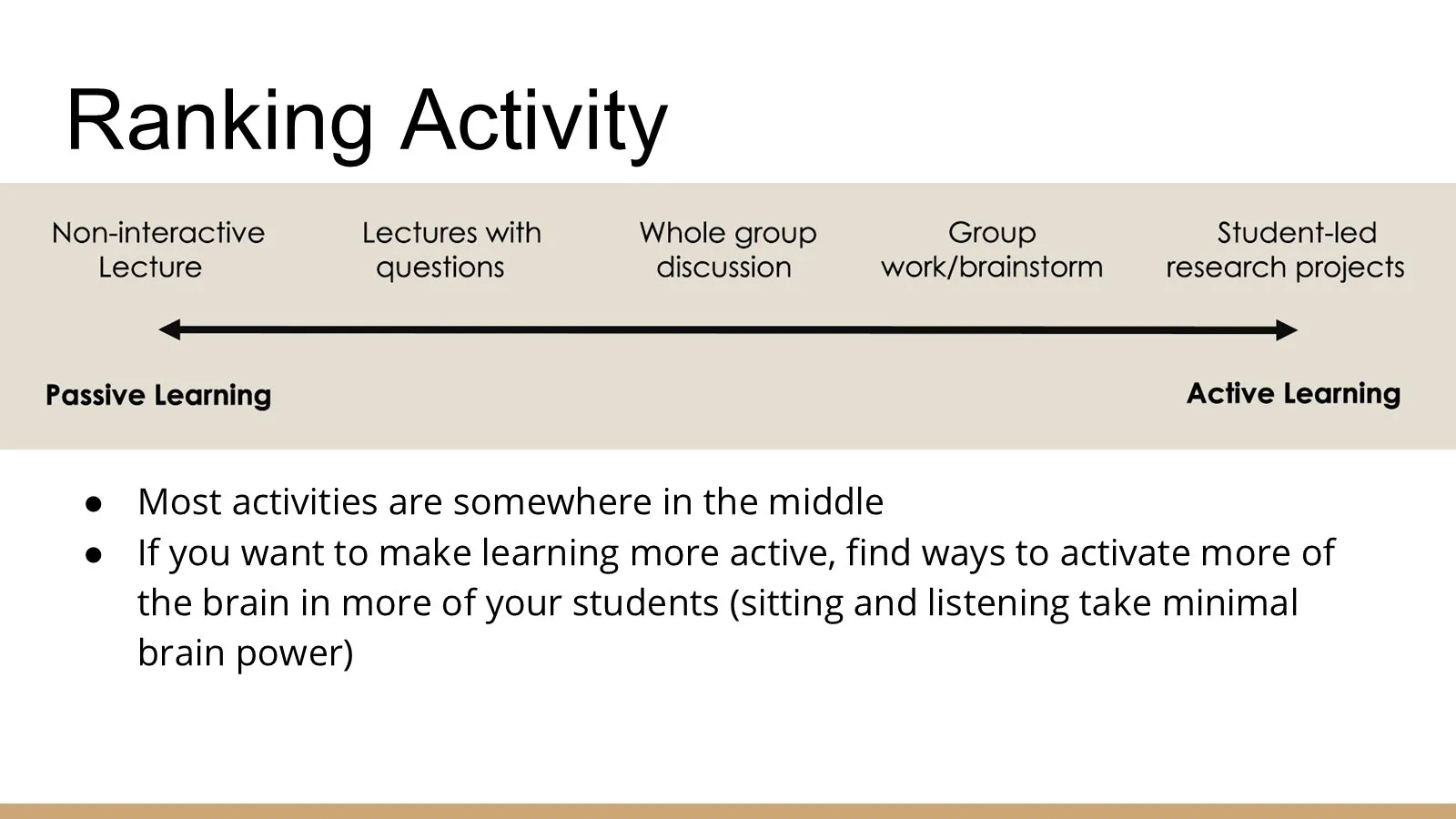
- Modeled the approach rather than describing it: a think-pair-share on memorable classes, a ranking activity on the passive–active spectrum, and the CNN lecture as a worked case study.
- Evidence or reflection
- Invited by the course instructor to lead the session. It opened and closed with brief participant surveys.
Slide 1 of 9
Courses
What I am prepared to teach — and why
When teaching emerging technologies such as AI, I integrate technical skills with organizational relevance: for business students, an AI course can combine technical foundations with organizational applications, ethical analysis, and hands-on evaluation of AI systems.
AI, machine learning, and deep learning in business
- Guest lecturer, AI/ML/DL in Business Information Technology (Fall 2024; Spring 2026)
- Teaching assistant for the course (Fall 2024) and for the Ph.D. seminar in AI, ML, and DL (Fall 2024; Fall 2026)
- Built a CNN-based research artifact; works in PyTorch, Keras, and Azure ML Studio
Cybersecurity management
- Teaching assistant, Cybersecurity Management I (Fall 2024)
- Research program in healthcare privacy and information disclosure
Data analytics and visualization
- Teaching assistant, Advanced Excel — approximately 120 students (Fall 2020)
- R, Python, SQL, Stata, Tableau, and Power BI in research practice
- Coursework in data analytics
Systems analysis, web development, and technical IS
- Founder and lead developer of OkWellThen, a healthcare price-transparency platform
- Solutions architect intern, Adobe (Summers 2019 and 2020)
- JavaScript, Vue.js, Node.js, MongoDB, HTML/CSS, C++, and C#
Introductory and managerial information systems
- B.S. in Information Systems and Master of Information Systems Management (Healthcare Track)
- Industry experience at Adobe, Sorenson Impact Foundation, and the BYU Healthcare Initiative
Project management
- Coordinated teaching assistants at Virginia Tech (Fall 2024)
- Coordinated a three-month pilot mentorship program pairing 15 students with industry professionals
- Coursework in project management
Research methods (doctoral)
- Led a Ph.D. seminar session on preparing to teach with evidence-based, active-learning principles
- Advised doctoral students on research proposals and evaluated weekly reading syntheses
- Qualitative analysis, factorial survey and laboratory experiments, SEM, hierarchical modeling, and scale development
Experience
Teaching and mentoring
Fall 2024; Spring 2026
Guest Lecturer
Artificial Intelligence, Machine Learning, and Deep Learning in BIT · Virginia Tech
Interactive lectures on workplace applications of generative AI and on computer vision and convolutional neural networks.
Fall 2024
Teaching Assistant (TA Coordination)
AI, ML, and DL in BIT; Cybersecurity Management I · Virginia Tech
Coordinated other teaching assistants, assisted with course administration and grading, and delivered guest instruction.
Fall 2024; Fall 2026
Teaching Assistant
Ph.D. Seminar in AI, Machine Learning, and Deep Learning · Virginia Tech
Invited to lead a session on preparing to teach; held office hours on research proposals and evaluated weekly reading syntheses.
Fall 2020
Teaching Assistant
Advanced Excel · Brigham Young University
Mentored approximately 120 students; led midterm and final reviews on goal seeking, financial calculations, and VBA; gave formative feedback on approximately 40 final projects.
Spring 2016
Teaching Assistant
Interdisciplinary Honors Course · Brigham Young University
Tutored 50 honors students in introductory physics and mentored interdisciplinary capstone papers.
Development
Pedagogical training
- Completed
Introduction to Evidence-Based Undergraduate STEM Teaching
CIRTL
- Completed
Incorporating Active Learning
CIRTL
- Completed
Difficult Dialogues in the Classroom Workshop
CIRTL
- In progress · expected 2026
CIRTL Associate Teaching Program
Center for the Integration of Research, Teaching and Learning
Practices I will bring to my courses
Start-of-course survey
A brief survey on students’ backgrounds, interests, prior experience, professional goals, and concerns about the subject — answered individually in small courses and used to shape examples, activities, and outreach in large ones.
Informal midsemester feedback
Students identify what is supporting or impeding their learning while there is still time to respond.
Practice before evaluation
Opportunities to apply unfamiliar concepts, receive feedback before a final evaluation, and revise their thinking.
The full teaching statement is available with other application materials.