Projects
Things I have built and studied
Research artifacts and applied systems, each told the same way: the problem, my role, what was built or studied, the evidence, and what it contributed.
Research prototype · Patient-centered narrative intake
Compassionate AI
Dissertation Paper 1 · To be submitted fall 2026
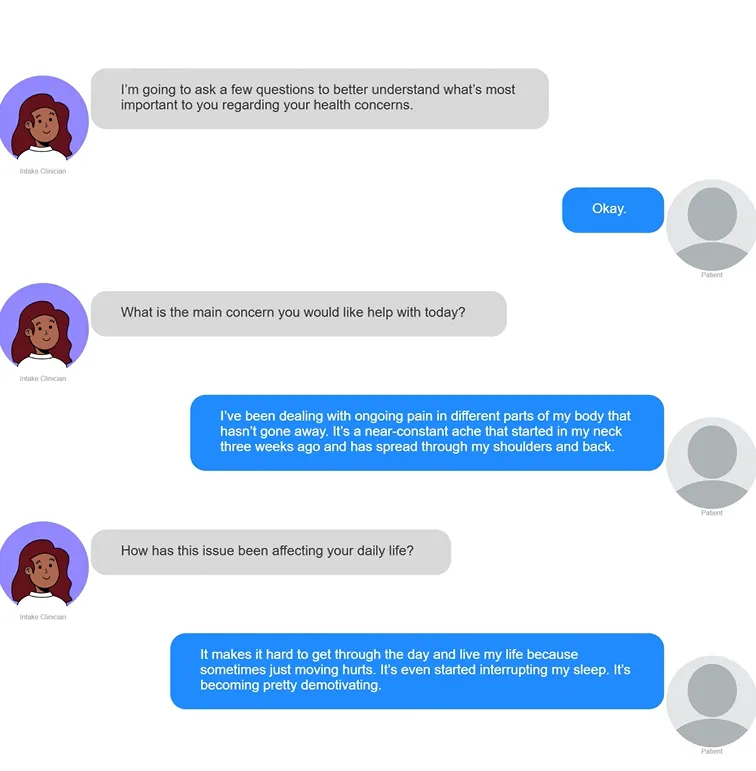
How the design of an AI intake assistant shapes whether patients feel heard, believed, seen, and comfortable.
Problem
Intake forms and rushed conversations often fail to capture patients’ lived experiences. Large language models can hold more natural conversations — but natural-seeming conversation is not the same as feeling understood.
Role
Lead researcher, with Tabitha L. James, Anthony Vance, and Paul B. Lowry.
What was built or studied
- Conducted 27 semi-structured interviews (about 1,420 recorded minutes) on patient experiences with healthcare intake.
- Co-developed a coding framework for the interviews.
- Translated the themes of being heard, believed, and seen into testable design elements: memory-based recall, symptom and emotional validation, and identity concordance.
- Designed AI-mediated intake vignettes for a factorial survey experiment.
Evidence
- Interrater reliability of κ ≈ .81 on the coding framework
- Presented at AMCIS 2025 (TREO)
Contribution
Identity concordance and patient-centered communication influence how warm and competent patients perceive an AI intake assistant to be, which in turn shapes psychological comfort.
Research artifact · Psychological responses to AI feedback
Judgy AI
Commonwealth Cyber Initiative-funded program · Papers in progress
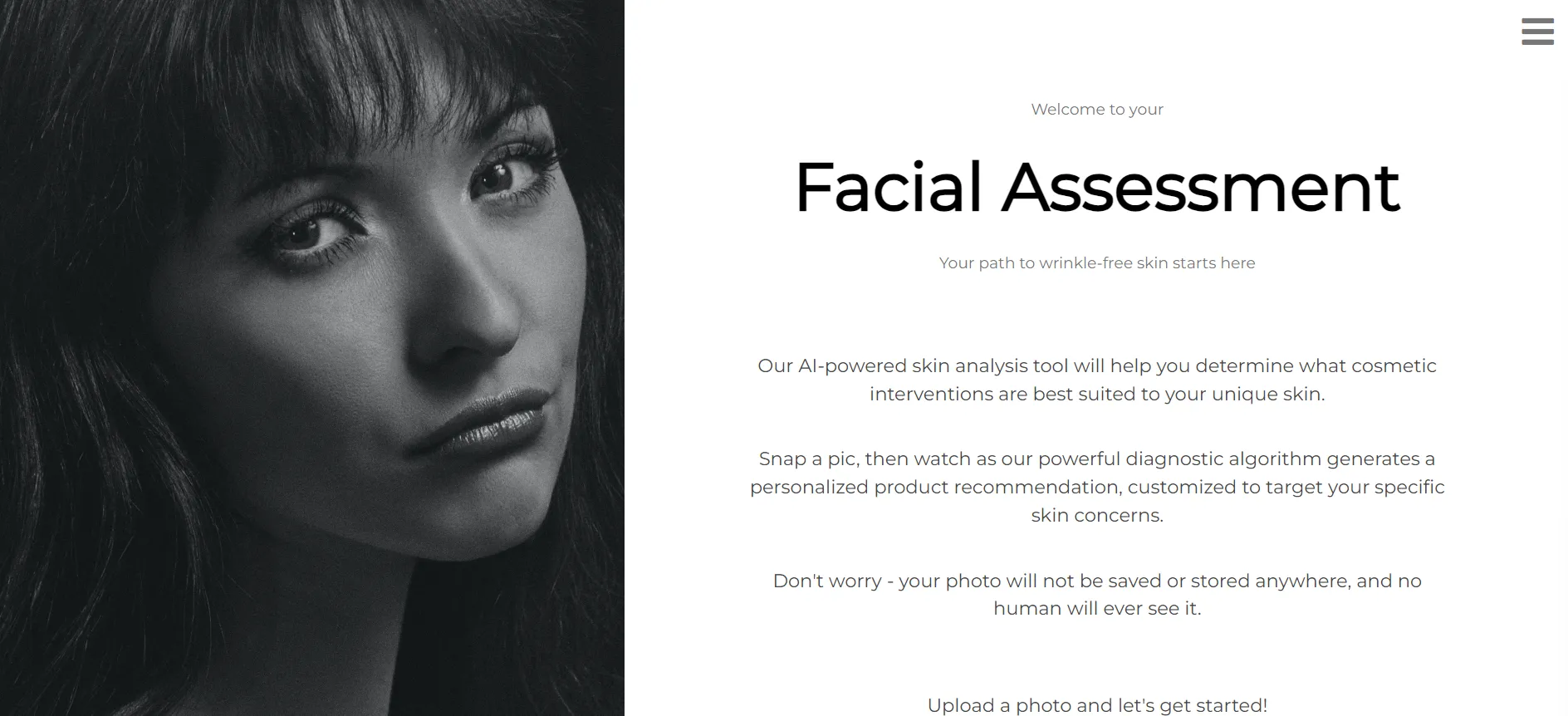
A CNN-based appearance-evaluation tool built to study how people respond when AI judges them.
Problem
AI systems increasingly classify people on personal attributes such as personality, looks, and qualifications — for example, cosmetic apps that assess skin and suggest purchases. Little is known about how people respond to being judged by an algorithm.
Role
Designed and implemented the research artifact; co-author with Amy Chaput, Taylor Bullock, and Tabitha L. James.
What was built or studied
- A convolutional neural network (CNN)–based application that evaluates participants’ facial appearance and returns feedback.
- Studies of how confirmatory feedback shapes perceived usefulness, satisfaction, trust, and purchase intentions.
- Follow-on papers on self-verification, psychological reactance, and the buffering role of self-compassion.
Evidence
- Presented at AMCIS 2026 (TREO); findings to date are preliminary
- Part of a Commonwealth Cyber Initiative-funded research program
Contribution
Examines how people react to judgmental feedback from AI systems and how those reactions may influence their consumption behavior — a context in which prior findings of both algorithm aversion and algorithm appreciation suggest that how AI is used matters.
Founded and built · Healthcare price transparency
OkWellThen
2020–2021 · Master’s thesis project
A platform that turned public hospital pricing data into comparisons consumers could actually use.
Problem
Hospital pricing data is publicly available, but public data is not the same as a comparison a consumer can act on.
Role
Founder and lead developer.
What was built or studied
- A web platform that transformed publicly available hospital pricing data into consumer comparisons across dozens of procedures, insurers, and six major Utah hospitals.
- A hospital-facing interface to support direct data integration and regulatory compliance.
Evidence
- More than $6,000 in competitive funding
- Master’s thesis: “OkWellThen: A Platform for Creating Transparency in Healthcare” (BYU, 2021; advisor Jeff Jenkins)
Contribution
An early instance of designing an information system around a consumer need in healthcare, preceding later research on patients’ experiences with health information.
Industry and applied work
Before the Ph.D.
Enterprise architecture, impact investing, and healthcare industry work — experience that connects technology to organizational problems.
Summers 2019 and 2020
Solutions Architect Intern
Adobe Inc., Cloud Technology
Mapped business capabilities to enterprise technologies and developed a web-based market-clock application integrated with LeanIX for strategic planning and executive reporting.
Aug. 2020–Mar. 2021
Financial Analyst / Technical Consultant
Sorenson Impact Foundation
Evaluated financial, social-impact, and technical feasibility for ventures seeking up to $250,000 in fund investment and $1 million in foundation support.
Jan.–Dec. 2021
Technical Consultant
Healthcare Initiative Team, BYU Business Career Center
Managed a database of more than 10,000 healthcare-industry contacts and coordinated a three-month pilot mentorship program pairing 15 students with industry professionals.